

Adverse Effects Of Shaft Voltage On Motor Performance
Oct 14, 2026
Leave a message
For motor products, bearing system issues have always been a popular topic. Quite often, especially for motor manufacturers, bearing system failures are simply attributed to bearing quality problems. Some motors undergo frequent bearing replacement yet the problem remains unsolved, because the root cause may not lie with the bearing itself, but shaft current.
From the perspective of current formation mechanism, shaft voltage and a closed loop are the prerequisites for generating shaft current. This paper mainly discusses its impacts on motor performance.
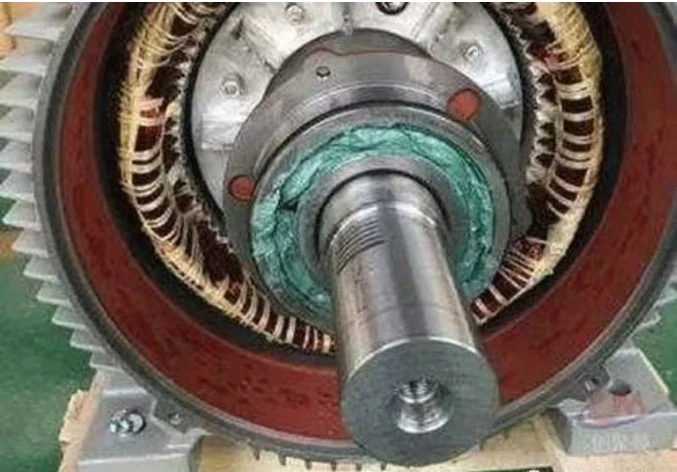
Before diving into this topic, let's talk about shaft magnetization. I once encountered a faulty motor. During disassembly, it was found that the motor shaft carried obvious magnetism and visibly attracted the screwdriver used for disassembly. Shaft voltage refers to the voltage induced on the shaft due to asymmetric motor magnetic fields, shaft magnetization, electrostatic charging and other factors. Shaft voltage occurs during motor operation, including voltage across both ends of the shaft, local shaft voltage and shaft-to-ground voltage.
Shaft voltage directly attacks the bearing system. When the shaft voltage reaches a certain value, the lubricating oil film (grease film) inside the bearing will be broken down, forming a closed loop and generating such shaft-side discharge current. It features low voltage and high current. The effect of this discharge current will cause heat buildup, degrading and failing bearing lubricating oil (or grease) due to excessive temperature. The bearing will operate under intermittent dry friction, resulting in bearing burnout and even sintering adhesion between the bearing and shaft.
Electrocorrosion on bearings caused by this discharge is an accelerating process. Symptoms are insignificant at the initial stage, then develop into abnormal noise. Eventually, damage to bearing associated running components leads to bearing disintegration and burnout. This process is related to motor operating characteristics and the severity of this discharge phenomenon; it may take a long time or only several hours.
Theoretically, shaft voltage exists in most motors, only varying in magnitude. High-power motors, high-voltage motors and variable frequency motors suffer more severe shaft current issues. Therefore, the design and manufacture of such motors cannot be simply regarded as scaling up small motors in size and power. Necessary suppression measures shall be implemented.
Based on the above analysis, we can draw a conclusion: when analyzing bearing system faults of motor products, we should not be limited to mechanical analysis. Especially for large electric motors, generators and similar equipment, electrocorrosion analysis caused by shaft-side discharge shall be carried out.